Laughter coaching, laughter yoga & laughter therapy, explained
People use several terms for laughter-based practices. Here, laughter coaching means professionally facilitated wellbeing activities using laughter, movement, breath and connection. It is not psychotherapy or medical treatment.
You don't have to feel like laughing to take part
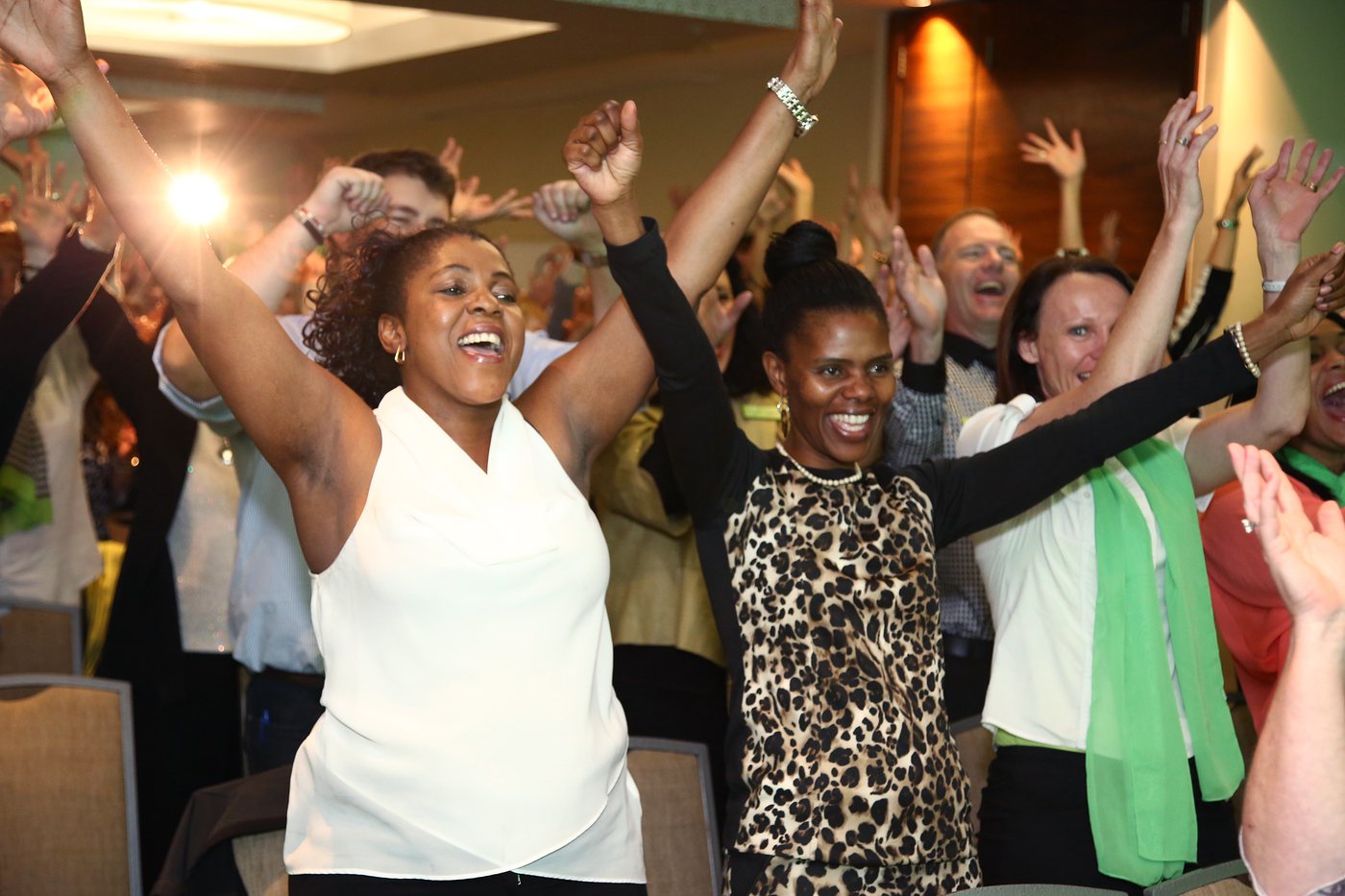
We begin with gentle invitations to move, breathe naturally, connect and explore intentional laughter. Some people find spontaneous laughter follows; others participate quietly or observe. Shareen adapts the pace and gives the group choices.
- Guided laughter & breath
- Gentle movement & play
- Simple connection, no sharing required
- Practical reset tools to take away
What the research suggests
Laughter is more than entertainment. Research suggests that laughter-based activities can support stress relief, mood and social connection. Laughter Coaching applies those ideas as a facilitated workplace wellbeing experience, not as medical treatment.
Lower cortisol in research
A 2023 systematic review found that laughter interventions were associated with lower cortisol compared with control conditions.
Mood and stress support
Studies in specific populations suggest that structured laughter activities may support mood and stress. Results depend on the group, format and duration and should not be treated as a guarantee for a workplace session.
Findings vary by population and programme length
Shared laughter and bonding
Research has linked shared laughter with higher pain thresholds, used by researchers as an indirect marker associated with endorphin activity and social bonding.
Dunbar et al., University of Oxford · Proceedings of the Royal Society B, 2011
Laughter may support stress relief, mood, connection and wellbeing. It is not medical or psychological treatment and does not replace professional care.
Laughter is at the heart of Human Reset, not the whole of it
Shareen has worked with laughter since 2009, when she trained as a Laughter Yoga teacher in India. Seventeen years of rooms showed her that laughter works best alongside play, movement, breath, awareness and connection. That is why it now sits at the centre of Human Reset, the broader system she created for teams under pressure.
 Illustrative image
Built for the sceptic, the introvert and the exhausted
No one is put on the spot. No one has to be funny, share a feeling, or perform. Sceptics are welcome to watch first and join in when they are ready, seated or standing.
Tell us what’s happeningFrequently asked questions
What happens in a laughter coaching session?
We begin with gentle invitations to move, breathe naturally, connect and explore intentional laughter. Some people find spontaneous laughter follows; others participate quietly or observe. Shareen adapts the pace and gives the group choices.
Do I need a sense of humour or have to be funny?
No. You don't have to feel like laughing to take part, and nobody has to be funny, perform or share anything.
Is laughter therapy scientifically proven?
Research suggests laughter can support stress relief, mood and social connection. Findings vary by group, format and duration, so no outcome is guaranteed.
Is this therapy?
No. Laughter coaching is a facilitated wellbeing activity, not psychotherapy or medical treatment, and it does not replace professional care.
Tell us what's happening in your team.
Team building, a wellness day, a conference slot, a year-end or a school session. Share a little about your people and your date, and Shareen will suggest the most useful next step.
Not sure it’s right for your team? Start with a 30-minute Room Reset.
Plan a team session